Fire has a way of making things visible.
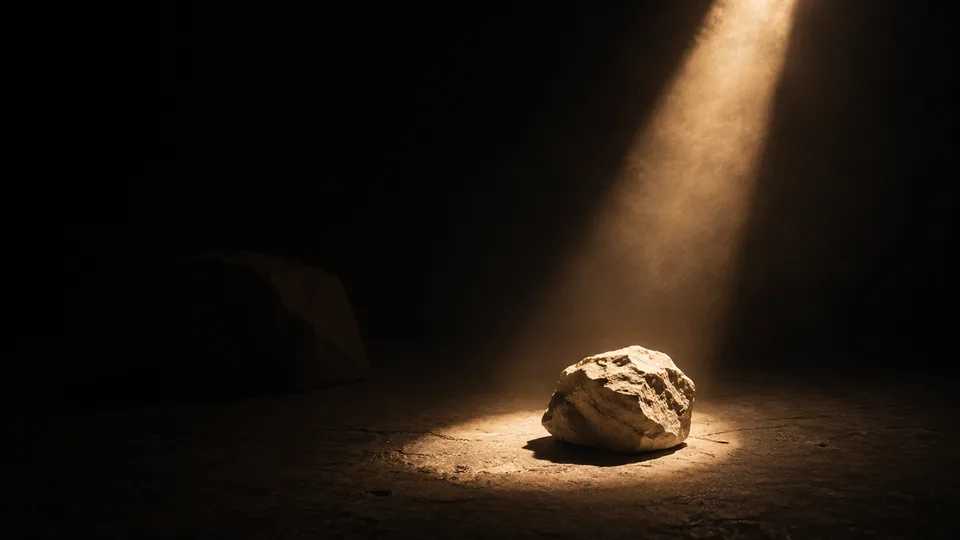
What you can't see in the dark, fire reveals. Fire doesn't change things themselves—it changes your perception of them. A stone in the dark and a stone in firelight are the same stone, but you see two different things.
That sounds like a good thing. Seeing clearly is better than not seeing.
But there's a cost to it that isn't obvious yet.
01
Fire, Stacked on Fire
The Book of Documents describes Fire in the same short form as the other elements.
Four characters: 火曰炎上 — “Fire blazes and ascends.”
And from that, one taste: 炎上作苦 — “blazing and ascending becomes bitter.”
That's it. No passion, no leadership, no extroversion.
But the character 炎 is worth a closer look. It's a compound ideograph: fire over fire. Fire stacked on fire. It doesn't describe what fire does to something else—it describes fire becoming more intensely itself. In the traditional commentary, Kong Yingda cites Wang Su: “The nature of fire is to blaze intensely and ascend.”
Fire's nature is to burn intensely and rise.
This is important. It points to two things: first, 炎 emphasizes intensity and blazing; second, 上 is direction—upward. The classical material gives us Yan Shang—fire stacked on fire, blazing and rising.
What about “making things visible”?
That's not in the classical material directly. It's Baziritual's reading, extending from Yan Shang. In the real world, stronger fire usually means brighter light. So the question we're asking is no longer just how fire burns—it's: as the light gets brighter, what happens to our seeing?
That's where this article is going.
02
Seeing Clearly Is Not Seeing Everything
Eyes adapted to brightness lose the ability to see details in the dark.
This isn't complicated. Walk from a bright room into a dim one, and it takes a while before you can make anything out. The reverse is also true—stay in the dark long enough, and a sudden bright light will blind you.
Fire works this way: it makes one thing extremely clear, at the cost of making everything else blurry.
Fire isn't deceiving you. This is just what fire does. Fire doesn't show you everything—it shows you what it illuminates. The problem is a habit of mind: when something is lit up brightly enough, we tend to assume that this is all there is, or at least the most important part.
Think of an example from your own life. You've been wrestling with a question, unable to resolve it. One day you find an explanation that lights the whole thing up—that's it. Everything clicks into place. But later you may realize that what made that explanation so bright was precisely that it blocked out other possibilities. It made you unable to see the evidence that didn't fit.
Fire doesn't make things truer. Fire just makes things more visible.
There's a gap between visibility and truth.
03
A Good Explanation Can Be More Dangerous Than a Wrong One
Why is an explanation powerful?
Because it compresses dozens of messy facts into one clear structure. You're faced with scattered pieces—conflicting evidence, contradictory feelings, unclear relationships—and suddenly someone gives you a framework, and everything falls into place.
That feeling is too comfortable. Once you have a good enough explanation, you stop. You stop gathering new information. You stop questioning the framework itself.
The danger of a good explanation isn't necessarily that it's wrong. It might be entirely correct. The danger is: once it explains enough, you may stop looking.
There's a more recent example of this.
AI can give you a complete, well-structured answer in a second. You ask a question, it gives an answer. It seems to have said everything. But the more complete the answer, the less likely you are to keep asking. AI isn't hiding anything from you—it's just shining the light too brightly.
Note: this isn't a criticism of AI. AI is just a contemporary example. Any system that produces complete answers quickly does the same thing—it makes one thing extremely clear while making it harder to notice what hasn't been illuminated.
04
Vision Has Limits
If the danger of fire isn't darkness, but brightness so strong that we forget darkness exists—then the response isn't to turn off the fire or retreat into the dark.
What you need to ask is:
What is the clearest thing I see right now, and what is it obscuring?
My anxiety is clear—but what is it obscuring?
My plan is clear—but what is it obscuring?
My explanation is clear—but what is it obscuring?
These questions aren't denying what you see. They're asking one thing: when you're standing in the brightest light, can you still remember that light has limits?
Sometimes remembering that means stepping away from the light for a while—not because darkness is better, but because darkness is where you're reminded that seeing has limits at all.
The most dangerous thing about fire is not darkness.
It's a light so bright that it makes us forget darkness ever existed.
Continue the Practice
If you'd like to understand how Fire functions within the full Five Elements system—and how it interacts with your own life structure—try Baziritual's free Element Profile.
It won't tell you “whether you're a Fire person.” It will show you, within your life structure, which movement patterns are more prominent and what relationships are at play.
Not a label. A starting point for observation.
Explore Your Element Profile →